Saturday, September 30, 2017

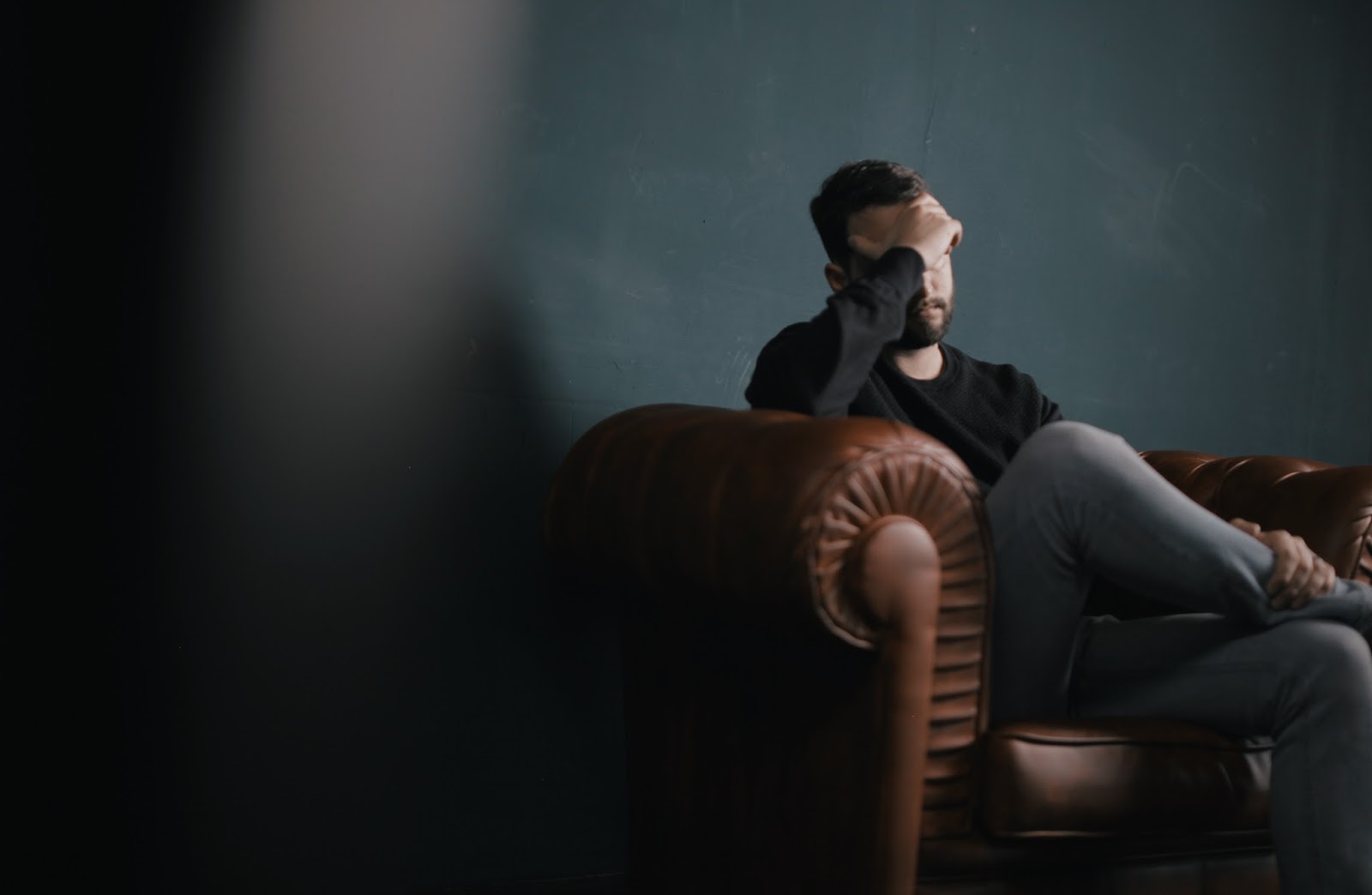
Mental Illness in Men


          Did you know, that although more women are diagnosed with common mental health problems than men, the rate of male suicide is significantly higher? This suggests that men are suffering with mental illness more than we are aware, and are not getting (or asking for) the help they need.

          Statistics on men with mental illness are difficult to fully know, because many cases go unreported or undiagnosed. I believe this is because of the dangerous idea we teach boys from a young age.

          "Men don't cry." "Man up." "Don't be such a girl." These things are used with such a negative undertone, in response to boys expressing normal human emotions, that it implies that these emotions aren't appropriate for them to be experiencing. Society forces boys and men to believe, that what they're feeling isn't valid, based solely off of their gender. This later evolves into a hidden shame around male mental health warriors, which should not exist.

          For men under the age of 35, suicide is one of the leading causes of death and 74%, or roughly 4/5 suicides are men.

          The fact is, mental illness affects anyone. No one chooses it, yet no one is immune to the possibility. This includes people of all genders, races, statuses, sexualities, religions and ages. We need to erase the idea within our society, that it is somehow a taboo thing, for men to experience pain, depression, anxiety, and hurt.

          If you are a man (cis, or trans) suffering from mental illness, I want to tell you something very important. Your masculinity is not defined by how much you can keep to yourself. You are allowed to feel, you are allowed to cry, you are allowed to reach out. Seeking help does not make you weak, in fact it takes a lot of courage and strength to do so. You deserve recovery and what you going through is valid.

-Tori Lynn

Photo by Nik Shuliahin on Unsplash

Thursday, September 28, 2017

Ricardo Yagüe - SLLY Partner


          First of all, I want to introduce myself: I’m Ricardo Yagüe, 17 years old and live in Venezuela. I’ll be collaborating with Tori with the depression blogs. I self-diagnosed me with depression four years ago, when I was 13, and in this entry I will be talking about my stories and the impression I got from my illness.


          When I was 12 (late 2012) I entered middle school, with good grades, a big classmates group and nice acceptance from my peers I started what had to be the worst period of my short life. I’m not entirely when and why my depression hit me, but I do have some theories: first of all, I never had had a girlfriend nor kissed anyone, the school I was in was of a military regime (we had military uniforms, haircuts and schedules, plus the terrible and abusive discipline and hierarchy), I had a power spot within my class, but nobody respected our authority (we were 4 “honored” students). All of that stuff distressed me a lot, and I was dragging a lot of discomfort from elementary school, with myself, my grades and my attitude and personality. When 2013 arrived, my feelings and emotions started getting darker, first trimester of 2013 was my peak performance in grades, plus the peak of my friendship with the girl I had a crush on, let’s call her Girl A. Near my birthday, on March 29, my mental stability started getting worse and worse. On my birthday, I celebrated it with my mom and stepdad and Girl A, it was really fun, I may say that was one of the best birthday celebration I had, but when I got home, despite of the happiness of the celebration, I was feeling really down. That night, past 1am, I debated myself for almost an hour whether killing myself or not, I had the rope in front of me, I tied the knot, but was too scared to do it, I saw my friend’s faces, my mom’s and dad’s face, I saw them crying and I just couldn’t do it.


          Near the end of the school year, I started feeling better, then in eight grade (I was in seventh grade) I started exploring who I was and discovered I liked horror a lot, and also that I liked men better than horror, but I wasn’t homosexual, but bisexual indeed. I won’t specify how I discovered it because I’m not really sure myself, but no, it didn’t involve physical stuff with nobody. On 2014 my relationship with my mom got to an unnerving point and I ended up making her cry, the country’s situation got worse and a lot of stuff was going on, however I convinced my mom to change myself to a different school, I was really excited when I exited eight grade and was ready to start ninth in a different, more interesting and tranquil school. However, during that summer I had a terrible paranoia attack, I had got really attached to horror stuff (videos, stories, creepypastas) that my brain just couldn’t handle it. I broke down, wasn’t able to sleep with the lights off and panicked over hallucinations.


          When I started ninth grade in the new school I felt renewed, so many nice people to meet, made great friends and started telling some people I was bisexual. I felt relieved, I was in my comfort zone, I got enrolled in the Model of United Nations (google it) and it was great. Nevertheless, my depression didn’t disappear, but it wasn’t fixated, in came in waves, not regularly and not as deep as my first episode. After ninth grade I entered high school (same school), did first and second year almost swiftly (we only have two years of high school) and now I’m graduated. 


          2017 has been a really mesmerizing year, I had my first boyfriend, my first kiss and my first time. It’s as like if all the little goals I had were accomplished all at once. I met Tori and a lot of new friends, I discovered about non-binary genders and got involved more with the community, that helped me clarify and understand that I was indeed a pansexual, and that I am gender fluid. Now I am more open with my parents and everybody, all my friends know I am pansexual and know I am gender fluid. I still have my depression, but I redirect the bad energy trough writing.


          So, what did I learned about my story that can help you all? Easy:

• The best way to fight depression is knowing yourself, understanding what triggers your episodes, internalizing who you are and knowing your strengths and weaknesses.
• Open your mouth, speak, tell someone, my parents brushed it off and told me I was just sad, but it is important to tell people.
• Find something to do on your free time, especially if it requires deep thinking, or if it distracts you, one of the worst things you can do is to let yourself alone with your thoughts.
• Make friends and spend time with them, in eight grade I almost lived permanently during the weekends with my friends, that helped me a lot.
• Try discharging, trough that same activity you just found, your negative energy, and charge yourself a little bit.
• There’s nothing wrong with prioritizing your mental health over school, really.
• If I killed myself today, I would make a lot of people sad, and they’ll mourn my death, because there are people that care, even if you don’t see them

I love you all and wish you the best. -Ricardo
Tuesday, September 26, 2017

Underneath

         The Underneath Project was created as a way to encourage people to be comfortable in their natural skin. To promote self love in women who have grown up in a society that has told them they have to fit a certain mold or reach for perfection to be considered beautiful.

          Make up isn't the problem. So many times I've seen people preach against make up, and their hearts might be in the right place, but make up isn't really the bad guy. Make up provides a way for people, women and men, to express themselves, and expression is never a bad thing. The problem here is societies standards for women, and the pressure it creates for women to conform to a specific type of look to be considered "beautiful". We are expected to apply make up daily to be "acceptable". However, we also aren't allowed to wear too much, otherwise we fall victim to criticism.

          I've been wearing make up since I was 12 years old. I always thought that make up was what women were supposed to do. I didn't know differently, and I've even been told by other female members of my family that I look better with make up. This contributed to my need to perfect my make up look. I was never satisfied though. It was never enough, until I realized it wasn't the make up that was the problem, but the way I see myself. By the age of 13 I never left the house without make up. For me, the idea made me so uncomfortable, I would compare it to the idea of leaving the house without clothes. Without make up, I felt naked, exposed, and indecent. This is wrong.  No one should ever feel this way for simply not applying an optional product. At 19 and 20 I still didn't even feel comfortable enough with my skin to be around my boyfriend at the time, who I had been dating for a year, without make up on. I felt like if he saw me without it, I would become undesirable.

          I have struggled with acne for 10 years, and these past few years have been rough on my health. I fell ill back in 2015 and I've been on a downward spiral ever since. I'm often pale because of it and constantly tired, which results in dark circles under my eyes. Make up has helped me in these ways. It has kept my confidence up when I needed it to, but these things don't make me ugly, and make up shouldn't be the only reason I'm comfortable in my own skin. I don't need it to be beautiful, and neither do you.

          Our beauty is not defined by what we wear, weather make up or even clothes. Make up is a tool to accentuate your already beautiful features. It is supposed to be used to highlight your natural beauty, not cover you up. You are not a canvas that you paint on, but you are the art work and make up is your frame. You don't lose your value without it.

          Reshaping how we view ourselves is not an easy thing to do. With our whole lives being lived, and being told to think a certain way it might be a process, but I think learning to love yourself and be comfortable with your natural skin is something everyone should do. I'm still trying to get there myself. I'm now 21 years old and this is where my journey of self love begins.

          Remember, make up is not the problem. If you enjoy wearing make up, have fun with it! Use it to express yourself and get as creative as you want to. Just know that you don't need it to be desirable or beautiful.

I'm proud of you all!
-Tori Lynn XOXO


Tuesday, September 19, 2017

Self Love to Recovery

I think the hardest part about recovery is realizing that you deserve happiness, just like anyone else does. This is why loving yourself is important. You have to want recovery for yourself before you'll be willing to take the necessary steps to getting there. However, this concept is not an easy thing to accomplish for those who are dealing with depression, anxiety, self harm, eating disorders, or other forms of mental illness. 

Self love is often misunderstood. Loving yourself is not selfish, it is not conceited or wrong and it's okay. Truly loving yourself is understanding that even though there are going to be things we don't like about ourselves, we are still deserving to be comfortable in who we are. We deserve to recognize the good in ourselves.

A lot of the time, people base their desire to recover around people, and although this is a good motivator, you have to be careful. Unfortunately, people can often times be temporary. People come and go in our lives and if we base our desire to recover, around a person, we may lose motivation if they don't stick around. I've dealt with this personally. I used to wrap my happiness up in people, so when they left, I would fall apart. I've realized I have to have the mindset that I'm worth recovering for, just as much as I found them to be.

It's your life, your emotions, and your well being that you're trying to gain control over, so naturally it's you who deserves this.

What you deal with, isn't your fault. That is another thing people need to understand. Mental illness is not your fault, and you don't deserve to struggle and suffer from it.

Learning to love yourself is a process, and that process starts with wanting it. If you want to get there, if you want to be happy, and if you want to take your life back, then congratulations, that is your first accomplishment. Like every process, it will take time, and it might be difficult. There will be moments where you feel like things aren't going in the right direction, but recovery isn't just a straight line upwards. Recovery consists of set backs, relapses, ups, downs, circles and squiggly lines all over the place, however, if you get back up and try again, you're on the right track. I guarantee your recovery wont look like someone else's. Your path is specific to you, so please don't get discouraged. As long as you are trying your best, you are doing great.

I am so proud of you. You have potential and you are going to be okay.

-ToriLynn

Monday, May 22, 2017

Forgiveness & Apologies

          Forgiving someone who has hurt you, and apologizing when you’ve hurt others can both be difficult. Letting go of the pain someone has caused you takes time, and requires a healing process. Apologizing takes a lot of courage, because no one ever likes to admit they were wrong. A lot of the time, these things don’t get done. People don’t apologize and therefore, there is no forgiveness. So many people hold their pride closer than their respect for other people with results in other people holding grudges.


Apologies
          For me, I tend to apologize for everything. When I’m in the way, if someone says “excuse me” as they try to get past me I will apologize. These are what I call courtesy apologies. Not everyone uses them, but I know I do. These are different than admitting when we are wrong though.
          Apologies need to be genuine. I don’t know how many times I’ve heard “I’m sorry”, but didn’t truly feel like it was an honest one. That’s why sometimes it is difficult to forgive people even if they apologize, because sometimes, we just don’t feel it.

          Apologies won’t always get us what we want though. In some situations, they just aren’t enough to warrant second chances. This goes for both us giving and receiving apologies. Though, often times we are forgiven, and get to move on in the right direction with people, no one is obligated to let us back into their lives, and you are not obligated to let someone back in either. I have, on many occasions, had to explain to people that, although they are sorry, and I forgive them, I won’t be putting myself back, in a position, to be hurt again. Looking out for yourself is okay and sometimes it’s just what we need to do. If you’re ever in a situation where someone gets upset or angry that you won’t give them a second chance, just know it’s okay. Not everyone is going to understand. Just do what is best for you and try to move on.

Forgiveness
          Forgiving someone for hurting you can be difficult, in fact I still carry a few things around that I haven’t forgiven people for just yet. I’m getting there, but it is a healing process like I mentioned before. How quickly someone forgives is not only determined by the amount of pain caused, but determined by the person who was hurt and their ability to accept what happened and move on.

          Despite popular belief, forgiveness isn’t for the person who hurt you, it’s for you. Because holding onto the hurt people cause gets us nowhere. It’s an endless cycle and going without forgiving makes us relive the pain. It’s not about if the person who hurt you deserves the forgiveness, it’s about you moving forward and letting go of that pain. It’s about you taking control of your emotions and your mind and doing something about a situation you were faced with. So ultimately, forgiveness is for you. For yourself to find peace of mind, and you deserve that.

          Sometimes it takes awhile. I don’t expect anyone to get hurt and immediately say “I forgive you” and move on. That’s not a realistic mindset. I know how difficult it can be to forgive someone who has hurt you.

          I’ve had to forgive many people I my life, because if I didn’t, It would have destroyed me. The worst feeling is holding onto something for too long, so long even, you can’t remember what it was like not to hate them or what they’ve done. I personally can’t say I hate anyone. It would take quite a lot to get that sort of reaction out of me, but even so, I can say I’ve had immense dislike for a few people. I’m not perfect, and there are a few people I’m still working on forgiving, but that’s the key, actually working on it. Not letting yourself fall into the mindset of “This is how its going to be” for the rest of your life.

          Not everyone will understand the importance of forgiveness either. If you’ve done something that you’ve apologized for, yet this person doesn’t forgive you, try to understand, some people don’t have it in them to let go. You’ll need to find a way to forgive yourself for what it is you did. People make mistakes, and sometimes the consequences of our actions hurt, but even when we are sorry, there are still consequences. Sometimes there is nothing we can say or do to change some ones mind, whether about forgiveness or about second chances. We just have to accept this and move on, because dwelling on it won’t fix it.

          There’s a lot to forgiveness and apologies. So much, I’m afraid I can’t cover it all. All circumstances, situations and personal experiences are going to be different. They’re all going to have their own individual aspects to them so I can’t be specific to everything, but these are some general thoughts I have on the subjects.

My advice to you is this: 
  • Love yourself enough to forgive people, because holding onto grudges will only hurt you.
  • Humble yourself enough to apologize when you are wrong, and forgive yourself.
  • Understand that being forgiven can take time and doesn’t guarantee second chances.
  • Know that you are not obligated to give second chances if you forgive someone.


-Tori Lynn

Saturday, May 20, 2017

Toxic People

          Most people, in their lifetime, will come across a few toxic people. Whether family, friendships, or relationships. I’ve already encountered my fair share and I’ve been starting to learn a lot on how to handle it. Learning that I deserve better was the most difficult part, but also the most important. I first needed to value myself before I could understand where things were going wrong with the company I kept. I gave too many second chances to people who didn’t prove they deserved them. I used to hand them out freely, regardless of how much people had hurt me. I gave everyone the benefit of the doubt, and though in some cases that can be good and even appropriate, I wasn’t using my discernment to figure out if these were those appropriate situations. I let myself get hurt over and over, letting the same people back in, just to end up with the same results, when I should have been protecting myself.
(Proverbs 4:23 “Guard your heart above all else, for it determines the course of your life.”)

          I’m not saying to never give someone a second chance, I’m just saying to be careful of how many you hand out. I suggest, if you’re considering giving someone a second chance, do so with caution determined by the character they showed you previously.

          There is an aspect of manipulation to any toxic person or relationship and this is why they are so harmful. Toxic people have a few characteristics they can be identified by. Things to look out for include but are not limited to some of these listed below.

The Blamer: They will often make you feel like every argument, issue, or problem is your fault. Even if you can logically tell yourself otherwise and have proof that they are the ones who created said problem, they will still make you feel like you’ve done something wrong. They most likely will not listen or agree with anything you are saying, even faced with facts.
(Proverbs 18:1 “Unfriendly people care only about themselves; they lash out a common sense.”)
  They will not want to accept responsibility for anything if they are able to pass the blame off to someone else.

The Insulter: Back handed compliments are a very big sign that this person is toxic. Something such as “That dress looks good on you, it would look even better if you lost some weight.” These sorts of things tear people down more than they build people up, yet it’s disguised as a “compliment”. Don’t let yourself be fooled. Genuine compliments will leave you feeling happy or confident.

The User: Some toxic people will use you. Only call when they need a ride, and only hang out when you can provide it for them. Maybe they need to use your printer and that the only time you ever get a call back. We often feel obligated to do these things because in our minds, “that’s what friends do” but in reality, if they do not make an effort in the friendship outside of needing something, can you really consider yourself friends? Doing favors for friends doesn’t mean you’re being used, but when these favors are the only thing you seem to ever do with this friend, it may be time to start asking where you stand.

          There are so many different types of toxic people out there and they come in varying degrees. The sad thing is, sometimes they are the people we consider the closest to us. Using your discernment is the best way to figure out, when it’s time to say, enough is enough. You deserve to be treated with respect. We are only human and sometimes we give people too many second chances. I know I have. When it comes down to it, though, we need to be able to protect ourselves as well. Sometimes we need to be able to let go, and accept that no matter how many chances someone is given, if they do not want to improve themselves, nothing will change.
(Proverbs 14:18 “If you ignore criticism, you will end in poverty and disgrace, if you accept correction, you will be honored.”)

          It is not our job to fix people, however, nor is it our job to punish them. It is simply our job to do what is best for ourselves, and if that means removing these people from our lives, then that is what you should do.

          I have had people act as if removing them from my life is a punishment, do not let these types of people make you feel guilty. It is okay to put yourself first when you find yourself in situations where it is necessary.

          If you have someone in your life that makes you feel inferior when you’re around them, or sick when their name pops up on your phone. If that person makes you feel used, self conscious, or even guilty for things that were not your fault, then my advice to you is this: Evaluate the situation, talk with this person if you haven’t already, and let them know how you feel. If they do not seem apologetic for how their actions or words have affected you, then it’s time to let go. It is okay to let go of people who you feel, a continued friendship or relationship with, will not benefit you, or could potentially cause you more harm.

          You deserve to be happy and loved in all your relationships.

1 Corinthians 15:33 “Don’t be fooled by those who say such things, for ‘bad company corrupts good character.’”

Proverbs 14:7 “Stay away from fools, for you won’t find knowledge on their lips.”

-Tori Lynn